
Self-paced online IT courses · Austin, Texas
Find your IT course path
Robimhood Digital is an online learning platform for U.S. adults who want practical training in cybersecurity, DevOps, AI, and other in-demand IT fields. Courses are self-paced, built around the tools employers list in job postings, and shaped to fit around a full work schedule.
Field
Cybersecurity
Track
DevOps & cloud
Track
AI fundamentals
Format
Self-paced
Length
Four to twelve weeks
Continuation
Not sure where to start? Request a syllabus for any course.
Orientation
Start with the job you want, then pick the course
Most people arrive here knowing the destination, not the route. A help desk technician who wants to move into cloud security needs a different sequence than a marketing manager curious about AI fundamentals.
Before you enroll in anything, write down the role title you're aiming for and search three real job listings for it. The skills that repeat across those listings become your curriculum. That is the filter we use when we group courses into learning paths on this site.
Read the repeats carefully. If four of five listings ask for the same tool, that tool earns a place in your first month of study — and anything that shows up once can wait until you have a reason to learn it.

Cybersecurity track
Cybersecurity courses built around real defensive work
Our cybersecurity track covers the areas that show up most often in entry-level and mid-level job descriptions: incident response, digital forensics, and cloud security. You work through how analysts triage an alert, how investigators preserve evidence, and how security controls change when infrastructure moves to a cloud provider.
The vocabulary matters here. A cybersecurity certificate on a resume signals structured training, but what gets you through an interview is being able to explain what you did in a lab and why. Employers ask what you noticed, what you ruled out first, and how you documented the call you made.
If you are starting from zero, begin with the fundamentals module. It covers how networks actually route traffic and how operating systems record activity, which is the ground every later exercise stands on. Jumping straight into investigations before that groundwork usually means memorizing steps you cannot adapt.
Where to begin
Start with fundamentals and a lab you can describe out loud. Then add forensics or cloud security depending on which listings you are actually applying to.
Browse cybersecurity coursesDevOps and cloud-native training from Docker to Kubernetes
DevOps training has a recognizable core: version control, CI/CD pipelines, containers, and orchestration. Docker and Kubernetes anchor most modern curricula because they are the tools teams actually deploy with.
Our DevOps path walks through containerizing an application, wiring it into an automated pipeline, and deploying it to a cloud environment. If you have never opened a terminal, start with the fundamentals module before you touch orchestration. The sequence exists for a reason: every later step assumes you can read what the previous one produced.
Learn the four in that order — containers, orchestration, automation, then the cloud platform where the work runs. Job listings usually name all four together, which is why they are taught as one track rather than four unrelated courses.

AI fundamentals
AI fundamentals for people who don't write code
You do not need a computer science degree to work productively with AI tools. Universities have recognized this: USC Marshall's AI Essentials courses are open to students from any major and require no technical background, and standalone certificate programs now target professionals who need to understand, apply, and ethically implement AI rather than build models from scratch.
Our AI track follows that same practical logic. You learn what machine learning can and cannot do, how to evaluate an AI tool before your team adopts it, and where the ethical questions actually land in day-to-day work.
If you do want to build models eventually, say so early. That is a different route with more math and more code, and it is better to know that before you spend a term on tool evaluation.
See AI fundamentals courses
Evening study is the normal rhythm here. Most learners fit coursework between shifts, after dinner, or on weekend mornings.
Self-paced and accelerated formats, and when each makes sense
Every course here is self-paced by default. That suits people studying after work or between shifts. But self-paced is not always right. If you are between jobs and can commit full days, an accelerated format compresses the same material into a shorter calendar window and keeps you accountable to a cohort. We label each course with its format so you can compare before you commit.
Self-paced
Work on your own schedule
Start any time, keep your own hours, and repeat modules as often as you need. Best when you are already working full time or your shifts rotate.
Fits a working week
Accelerated
Same material, shorter calendar
Scheduled deadlines and a cohort moving with you. Best when you can set aside full days and want the pace to carry you through the slow middle weeks.
Choose by schedule
The right choice depends on your schedule, not on which format sounds more impressive. Most learners who stall do so because they picked the format they wished they had time for.
How our curriculum stays current
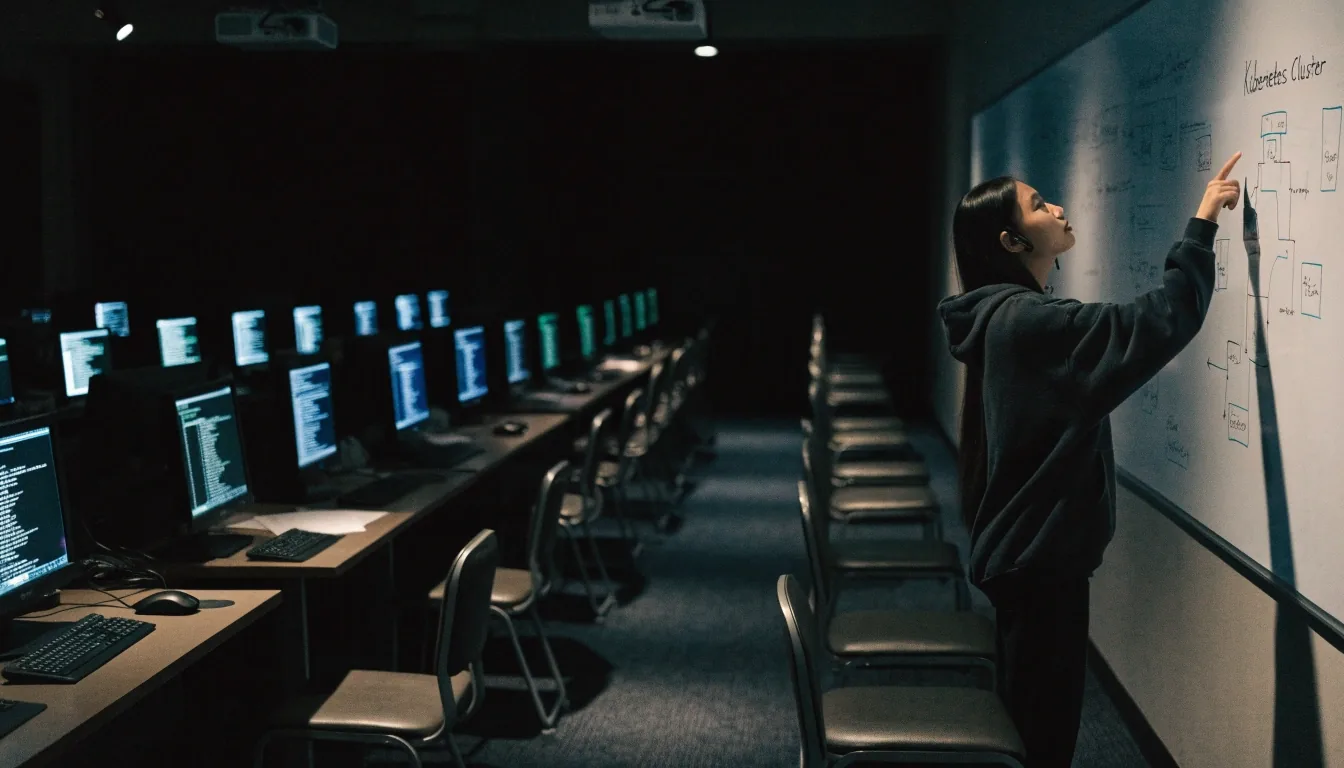
IT tools change faster than textbooks can print. Kubernetes releases update quarterly, cloud provider consoles get redesigned, and CI/CD tooling shifts every couple of years.
We review course content against current job postings and vendor documentation on a rolling schedule, and we retire modules when the tooling behind them is no longer common in production. When a course references a specific platform, it is because that platform still appears in real hiring requirements.
Check before you enroll
Every course page carries a last reviewed note. Open it, compare the tools named in the syllabus against the listings you saved, and see whether the module order still matches the job you want.
Certificates: what they signal and what they don't
A certificate documents that you completed structured training and passed its assessments. It does not replace a degree, and it does not substitute for hands-on experience.
What it does well is give a hiring manager a checkpoint: this person chose a direction, finished something, and can talk about the material. Many learners stack certificates, one in cybersecurity, one in cloud, to build a coherent story. Treat each one as a brick, not a building.
Who these courses are for
Career switchers make up a large share of our learners. So do IT support staff adding security or cloud skills, and non-technical professionals who need working AI literacy. What these groups share is a specific goal and limited time.
If you are looking for a four-year degree pathway, a university program is the better fit and we will say so. If you want job-relevant skills in a format you can finish while working, you are in the right place.
Switching careers
First certificate
You want a direction and a first credential you can talk about in an interview. Start with fundamentals, then one applied track.
Already in IT
Adding a skill
You have hands-on experience and want cloud or security depth. Skip the orientation modules and go straight to the applied work.
Non-technical role
AI literacy
You decide whether your team adopts a tool. Focus on evaluation and ethics, not model building.
Ask four questions before you enroll anywhere. If a provider cannot answer them plainly, keep looking.
How to evaluate any online IT course, including ours
Question
Does the syllabus name the tools you will actually touch?
Question
Is there a lab or project you can show someone?
Question
Who maintains the content, and when was it last updated?
Question
Does the certificate map to anything a real employer asks for?
We publish our answers on every course page so you can compare us against other options without guessing. If a provider cannot answer those four plainly, that is your answer.
Building a path across cybersecurity, DevOps, and AI
The three tracks are not silos. Cloud security sits between cybersecurity and DevOps. DevSecOps explicitly combines them, putting security checks inside the CI/CD pipeline. And AI adoption work increasingly touches all three, since security teams now evaluate AI tools and DevOps teams deploy them.
You can start in one track and add another later. Many learners do, and the overlapping modules make the second path faster.
Where the tracks meet
Cloud security
Cybersecurity meets DevOps: controls applied where the infrastructure now runs.
DevSecOps
Security checks built into the release pipeline instead of bolted on afterwards.
AI adoption
One team evaluates the tool, another deploys it, and both need the same shared vocabulary.
Time and cost expectations, stated plainly
Most individual courses here run between four and twelve weeks at a few hours per week. Full learning paths take longer, often several months of part-time study. Cost varies by course and format, and current pricing is listed on each course page rather than buried in a bundle.
We do not promise a job at the end, because no course can. We do publish what each course covers, how long it takes, and what you will have built by the final module.
Questions we hear before people enroll
Which online cybersecurity course is best for beginners with no technical background? Open
Start with a fundamentals course that assumes no prior experience and includes hands-on labs. Look for a syllabus that explains basic networking and operating system concepts before it moves into incident response or forensics. Our cybersecurity track is sequenced this way, and the course pages list prerequisites explicitly.
Is a certificate enough to get started in cybersecurity, DevOps, or AI careers? Open
A certificate helps you get past an initial resume screen and gives you structured material to talk about in interviews. It does not replace hands-on practice or a portfolio. Most people pair a certificate with personal projects or lab work before applying.
What is the difference between a cybersecurity certificate and a cybersecurity degree? Open
A degree is a multi-year academic program, usually with general education requirements. A certificate is a shorter, focused sequence covering specific job skills. Certificates suit career switchers and working professionals; degrees suit people who want broader academic grounding or roles that formally require one.
Which DevOps skills matter most right now: Docker, Kubernetes, CI/CD, or cloud platforms? Open
All four appear together in most job listings, which is why they are taught as one track rather than separate courses. Docker and Kubernetes cover containers and orchestration, CI/CD covers automation, and cloud platforms are where the work runs. Learn them in that order.
Are AI courses for nontechnical professionals actually useful for career growth? Open
They are useful when they focus on evaluating and applying AI tools rather than building models. Several university programs now target exactly this audience. The practical value shows up in roles where you decide whether and how to adopt AI, not in roles where you train models.
How long does it usually take to complete an online cybersecurity or DevOps course? Open
Individual courses here run four to twelve weeks at a few hours per week. Accelerated formats compress that into a shorter window with scheduled deadlines. Full learning paths take several months part-time.
Getting answers before you commit
Pick a course you will actually finish
You can request a syllabus for any course and read the full module list before deciding. If you are unsure which path fits your background, describe your situation through the contact page and we will point you toward a starting course. No sales call, no pressure.
Talk to us
Robimhood Digital
88 Innovation Drive, Austin, TX 78701, USA
Monday to Friday, 9:00 AM to 6:00 PM Central Time
+1-512-555-0743
info@robimhood.digital